
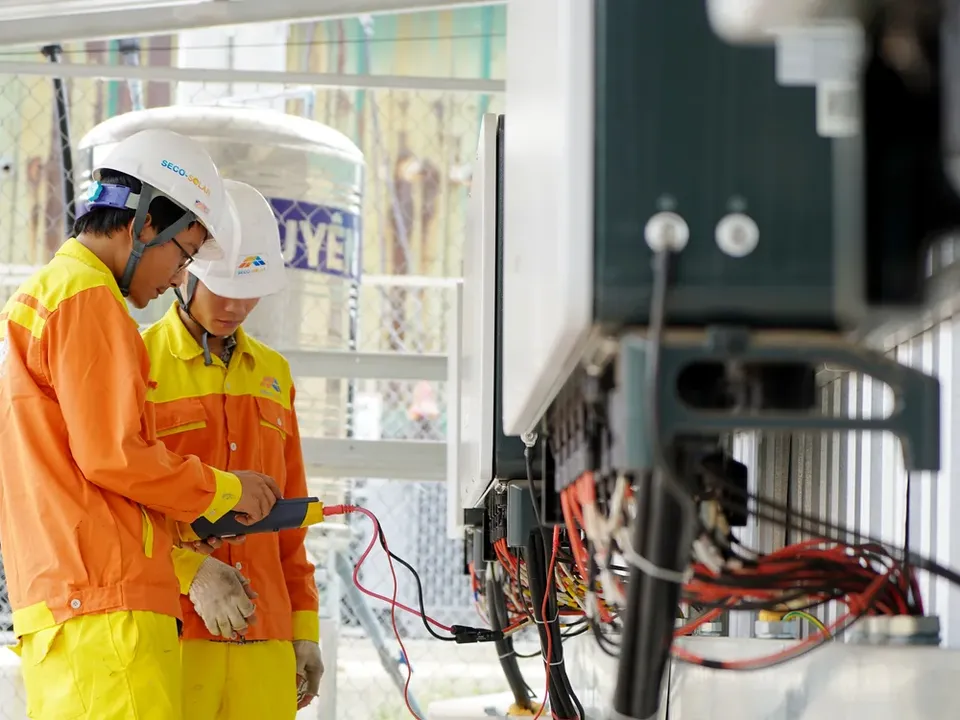
HVAC Operation and Maintenance
Reliable HVAC operation requires a clear understanding of equipment behaviour, maintenance priorities and indoor environmental needs. This programme develops a structured approach to inspecting operating information, identifying…
- Category
- Engineering and Operations
- Delivery region
- Saudi Arabia, GCC and MENA
Programme Summary
Reliable HVAC operation requires a clear understanding of equipment behaviour, maintenance priorities and indoor environmental needs. This programme develops a structured approach to inspecting operating information, identifying common performance problems and planning maintenance. Participants analyse air and water system scenarios, interpret service records and prepare corrective actions that support comfort, efficiency and reliable operation within their technical authority.
Training Objectives
1 Build practical knowledge of HVAC systems; 2 Improve recognition of common performance faults; 3 Strengthen preventive maintenance planning and records; 4 Connect operating efficiency with occupant needs; 5 Support safe escalation of technical problems.
Learning Outcomes
1 Explain air and water system functions; 2 Interpret supplied HVAC operating measurements accurately; 3 Identify plausible causes of performance faults; 4 Prepare a risk informed maintenance checklist; 5 Recommend corrective actions with verification measures.
Target Audience
HVAC Technicians; Mechanical Engineers; Facilities Engineers; Maintenance Supervisors; Building Operators.
Target Industries
Hotels; Hospitals; Commercial Offices; Retail Centres; Industrial Facilities; Education Campuses.
Course Contents
- Module 1 HVAC System Functions: Heating cooling and ventilation purposes; Thermal comfort and occupancy demands; System boundaries and service responsibilities.
- Module 2 Air Handling Systems: Air paths filters and fans; Coils dampers and heat recovery; Airflow imbalance and distribution problems.
- Module 3 Water Based Systems: Chillers boilers pumps and circuits; Flow temperature and pressure relationships; Water quality and fouling indicators.
- Module 4 Refrigeration Cycle Awareness: Evaporation compression condensation and expansion; Common operating symptoms and limits; Authorised refrigerant work and escalation.
- Module 5 Controls and Sequences: Thermostats sensors and control valves; Occupancy schedules and demand response; Interlocks alarms and operating sequences.
- Module 6 Routine Inspection Planning: Manufacturer instructions and maintenance frequencies; Equipment condition and access constraints; Defect recording and escalation thresholds.
- Module 7 Preventive Maintenance Tasks: Filters belts coils and drains; Lubrication alignment and cleanliness checks; Consumables spares and service records.
- Module 8 Indoor Air Quality Interfaces: Ventilation adequacy and contaminant sources; Moisture condensation and hygiene concerns; Complaint investigation and specialist referral.
- Module 9 Troubleshooting Methods: Symptoms measurements and hypothesis testing; Low capacity and unstable temperatures; Excessive energy noise and vibration.
- Module 10 Energy Efficient Operation: Setpoint coordination and scheduling opportunities; Heat transfer and distribution losses; Comparing performance under similar conditions.
- Module 11 Maintenance Work Control: Isolation permits and competent personnel; Contractor scope and task acceptance; Restoration checks and defect closure.
- Module 12 HVAC Improvement Case: Interpreting operating logs and complaints; Selecting corrective and preventive actions; Building a monitored maintenance plan.
Assessment
- 60 single best answer questions, including applied scenarios; one mark per question.
- 90 minute invigilated digital examination with identity verification. Approved accessibility adjustments preserve the assessed competence.
- Supplied reference pack permitted; external internet and AI assistance prohibited.
- Individual applied assessment (45 minutes): Analyse an HVAC performance case, identify likely faults and prepare a maintenance plan with safe work boundaries, acceptance checks and efficiency measures.
- Assessment criteria: Technical accuracy of fault interpretation; Suitability of maintenance and escalation actions; Clarity of performance verification measures.
- Pass each component separately: 45/60 written marks (75%) and at least 70% on the applied task.
- All mandatory criteria must pass: Identify isolation needs before intrusive maintenance.
- Individual results and feedback are provided. One reassessment may follow coaching under the published enrolment terms.
Certification
- Successful learners receive a TQCSI Arabia digital Certificate of Successful Completion.
- The certificate records the learner name, exact programme title, teaching hours, completion date and unique verification reference.
- Verified identity, full attendance and separate written and applied passes are required; all mandatory critical criteria must be met.
- Proposed issue target: within 30 calendar days of approved results and settlement of applicable fees.
- Records assessed HVAC operational and maintenance planning skills; it does not confer refrigerant handling certification or authorise live equipment work.
- Attendance confirmation may record completed hours for unsuccessful learners; it does not certify successful completion.
Programme Profile
- Number of daysNumber of daysNumber of days
- 333
- Total teaching hoursTotal teaching hoursTotal teaching hours
- 18 hours; breaks, pre course work and formal final assessments excluded.18 hours; breaks, pre course work and formal final assessments excluded.18 hours; breaks, pre course work and formal final assessments excluded.
- Delegates allowedDelegates allowedDelegates allowed
- Maximum 16 delegates.Maximum 16 delegates.Maximum 16 delegates.
- Training prerequisitesTraining prerequisitesTraining prerequisites
- Basic mechanical or building services knowledge is required. Participants should have maintenance or facilities experience; refrigerant handling authorisation is not provided.Basic mechanical or building services knowledge is required. Participants should have maintenance or facilities experience; refrigerant handling authorisation is not provided.Basic mechanical or building services knowledge is required. Participants should have maintenance or facilities experience; refrigerant handling authorisation is not provided.
- Pre course assignment and assessmentPre course assignment and assessmentPre course assignment and assessment
- Review a supplied air handling diagram and complete a 30 minute equipment recognition exercise.Review a supplied air handling diagram and complete a 30 minute equipment recognition exercise.Review a supplied air handling diagram and complete a 30 minute equipment recognition exercise.
- End of course assessmentEnd of course assessmentEnd of course assessment
- 60 question written exam (90 minutes) and individual applied task (45 minutes).60 question written exam (90 minutes) and individual applied task (45 minutes).60 question written exam (90 minutes) and individual applied task (45 minutes).
- Passing criteriaPassing criteriaPassing criteria
- 75% written and 70% applied, passed separately; full attendance. All mandatory criteria must pass.75% written and 70% applied, passed separately; full attendance. All mandatory criteria must pass.75% written and 70% applied, passed separately; full attendance. All mandatory criteria must pass.
Related Training Programme Options
Continue exploring services and programmes in the same specialist category.
 Training Programme
Condition Monitoring and Predictive Maintenance
Condition monitoring becomes useful when reliable measurements lead to timely maintenance decisions. This programme introduces vibration, thermal…
 Training Programme
Maintenance and Reliability Management
Maintenance leaders must connect equipment reliability, work execution and investment decisions to business priorities. This programme develops an…
 Training Programme
Computerised Maintenance Management Systems
A maintenance system produces value when asset information and work processes are reliable. This programme develops the skills needed to structure…
Discuss HVAC Operation and Maintenance
Tell us about your scope, locations and intended timeframe for a focused response from TQCSI Arabia.