
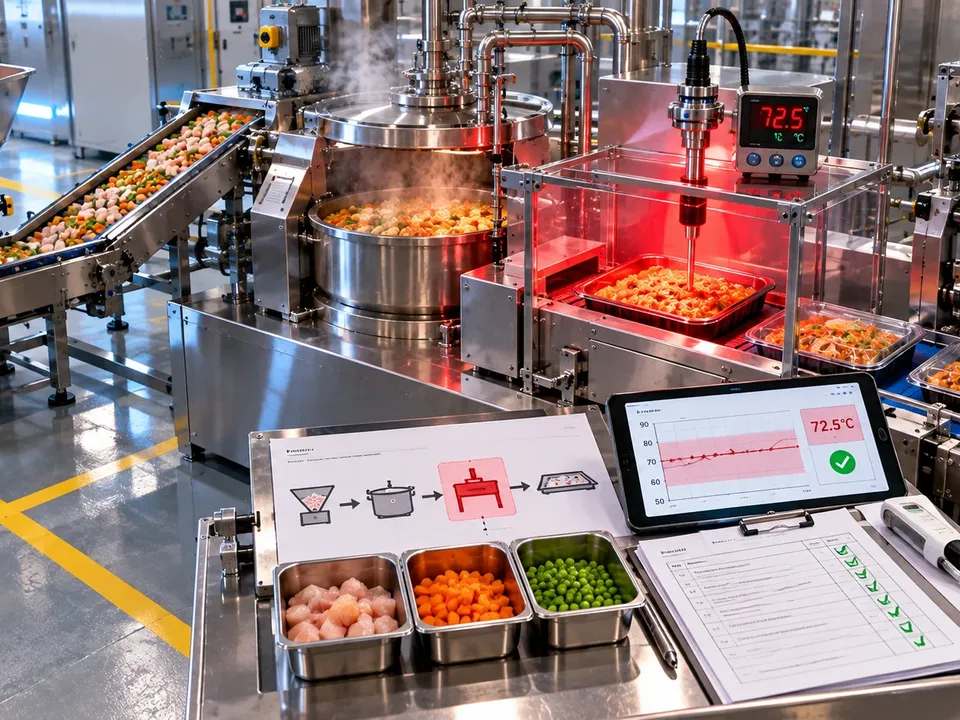
HACCP Management Validation and Verification Level 4
Strengthen the technical and managerial capability to maintain a defensible HACCP system. Experienced practitioners review hazard analysis, validate control measures, evaluate verification evidence and manage changes that can…
- Category
- Food Safety and Food Standards
- Delivery region
- Saudi Arabia, GCC and MENA
Programme Summary
Strengthen the technical and managerial capability to maintain a defensible HACCP system. Experienced practitioners review hazard analysis, validate control measures, evaluate verification evidence and manage changes that can undermine product safety. Progressive case work develops structured reviews and practical investigation skills, enabling managers to challenge weak assumptions and sustain effective controls across products, processes and suppliers.
Training Objectives
1 Deepen technical judgement in HACCP system management; 2 Strengthen control validation and verification planning; 3 Improve evaluation of monitoring and deviation evidence; 4 Develop disciplined change and reassessment arrangements; 5 Support defensible HACCP oversight and continual improvement.
Learning Outcomes
1 Critique a hazard analysis using supporting evidence; 2 Define validation needs and acceptance criteria; 3 Design a risk based verification programme; 4 Evaluate deviations and affected product decisions; 5 Prepare a justified HACCP review and improvement plan.
Target Audience
HACCP Team Leaders; Food Safety Managers; Technical Managers; Quality Assurance Managers; Process Development Managers; Food Safety Consultants.
Target Industries
Food Manufacturing; Beverage Manufacturing; Ready Meal Production; Dairy Processing; Meat Processing.
Course Contents
- Module 1 HACCP Management and Governance: System ownership and technical accountability; Team competence and decision authority; Review frequency and escalation arrangements.
- Module 2 Product Scope and Consumer Vulnerability: Product families and intended use boundaries; Vulnerable consumers and foreseeable misuse; Changes affecting acceptable hazard levels.
- Module 3 Prerequisite Effectiveness Review: Evidence of consistent hygiene controls; Weak prerequisites and HACCP consequences; Escalation of recurring operational deficiencies.
- Module 4 Scientific Hazard Information: Relevant scientific and surveillance evidence; Sources of uncertainty and evidence gaps; Specialist advice and documented assumptions.
- Module 5 Process Mapping and Operational Reality: Rework temporary flows and bypass routes; Seasonal changes and operating variations; Confirmation methods and reliable observations.
- Module 6 Hazard Analysis Quality: Hazard specificity and process relevance; Severity likelihood and justification quality; Reviewing exclusions and overlooked pathways.
- Module 7 Control Measure Selection: Effectiveness of individual control measures; Combined controls and process dependencies; Feasibility monitoring and failure consequences.
- Module 8 Critical Control Point Determination: Structured decision logic and exceptions; Distinguishing critical controls from hygiene routines; Documenting technical rationale and review triggers.
- Module 9 Critical Limits and Operational Targets: Scientific support for critical limits; Safety limits versus operating tolerances; Measurement uncertainty and monitoring capability.
- Module 10 Validation Study Planning: Define hazard target and required performance; Select representative conditions and evidence; Set acceptance criteria before testing.
- Module 11 Interpreting Validation Evidence: Published studies and process applicability; Experimental evidence and design limitations; Document conclusions and unresolved uncertainty.
- Module 12 Monitoring System Design: Detection timing and responsible personnel; Continuous versus periodic monitoring choices; Record integrity and equipment suitability.
- Module 13 Deviation and Product Control: Scope affected batches and process periods; Containment and authorised disposition decisions; Evidence needed before product release.
- Module 14 Corrective Action and Recurrence Prevention: Investigate technical and organisational causes; Select proportionate sustainable corrective actions; Verify effectiveness under operating conditions.
- Module 15 Verification Programme Design: Risk based methods frequency and responsibility; Record review observation and sampling balance; Independence and competence in verification.
- Module 16 Data Analysis and Verification Findings: Trends repeated deviations and weak signals; Sampling limits and interpretation of negatives; Escalating inconsistent evidence across controls.
- Module 17 Supplier and Outsourcing Interfaces: Inputs specifications and upstream controls; Service providers and outsourced processing evidence; Change notification and verification responsibilities.
- Module 18 Change Management and Reassessment: Product equipment and process change triggers; Revalidation needs and approval evidence; Update plans instructions and competence records.
- Module 19 HACCP Review and Assurance Reporting: Summarise effectiveness and unresolved risks; Prioritise corrective actions and resources; Report clear decisions to management.
- Module 20 Advanced HACCP Review Case: Critique a supplied hazard control system; Develop validation and verification proposals; Defend findings and improvement priorities.
Assessment
- 100 single best answer questions, including applied scenarios; one mark per question.
- 150 minute invigilated digital examination with identity verification. Approved accessibility adjustments preserve the assessed competence.
- Supplied reference sheets permitted; messaging, internet searches and external AI assistance prohibited.
- Individual applied assessment (90 minutes): Review a supplied HACCP system and prepare a validation brief, verification schedule, corrective action evaluation and justified recommendations for managing a significant process change.
- Assessment criteria: Scientific and process relevance of control reasoning; Suitability of validation verification and change arrangements; Defensible product safety decisions and improvement priorities.
- Pass each component separately: 75/100 written marks (75%) and at least 70% on the applied task.
- All mandatory criteria must pass: Do not approve critical limits without suitable supporting evidence; Protect potentially unsafe products pending authorised disposition.
- Individual results and feedback are provided. One reassessment may follow coaching under the published enrolment terms.
Certification
- Successful learners receive a TQCSI Arabia digital Certificate of Successful Completion.
- The certificate records the learner name, exact programme title, teaching hours, completion date and unique verification reference.
- Verified identity, full attendance and separate written and applied passes are required; all mandatory critical criteria must be met.
- Proposed issue target: within 30 calendar days of approved results and settlement of applicable fees.
- Records assessed TQCSI course achievement; the level indicates programme progression and does not imply equivalence to an external qualification framework.
- Attendance confirmation may record completed hours for unsuccessful learners; it does not certify successful completion.
Programme Profile
- Number of daysNumber of daysNumber of days
- 555
- Total teaching hoursTotal teaching hoursTotal teaching hours
- 35 hours; breaks, pre course work and formal final assessments excluded.35 hours; breaks, pre course work and formal final assessments excluded.35 hours; breaks, pre course work and formal final assessments excluded.
- Delegates allowedDelegates allowedDelegates allowed
- Maximum 16 delegates.Maximum 16 delegates.Maximum 16 delegates.
- Training prerequisitesTraining prerequisitesTraining prerequisites
- HACCP development knowledge and experience applying a food safety plan are required. Working knowledge of food hazards and relevant processes is expected.HACCP development knowledge and experience applying a food safety plan are required. Working knowledge of food hazards and relevant processes is expected.HACCP development knowledge and experience applying a food safety plan are required. Working knowledge of food hazards and relevant processes is expected.
- Pre course assignment and assessmentPre course assignment and assessmentPre course assignment and assessment
- Review a supplied HACCP dossier and complete a 45 minute diagnostic on hazard analysis, control validation and verification.Review a supplied HACCP dossier and complete a 45 minute diagnostic on hazard analysis, control validation and verification.Review a supplied HACCP dossier and complete a 45 minute diagnostic on hazard analysis, control validation and verification.
- End of course assessmentEnd of course assessmentEnd of course assessment
- 100 question written exam (150 minutes) and individual applied task (90 minutes).100 question written exam (150 minutes) and individual applied task (90 minutes).100 question written exam (150 minutes) and individual applied task (90 minutes).
- Passing criteriaPassing criteriaPassing criteria
- 75% written and 70% applied, passed separately; full attendance. All mandatory criteria must pass.75% written and 70% applied, passed separately; full attendance. All mandatory criteria must pass.75% written and 70% applied, passed separately; full attendance. All mandatory criteria must pass.
Related Training Programme Options
Continue exploring services and programmes in the same specialist category.
 Training Programme
Advanced Food Safety Risk Assessment and HACCP Leadership Level 5
Develop advanced judgement for food safety decisions involving uncertain evidence, complex processes and competing control options. Participants…
 Training Programme
Prerequisite Programmes for Food Manufacturing
Translate food-manufacturing prerequisite requirements into workable controls for facilities, utilities, equipment, materials and personnel.…
 Training Programme
Food Allergen Management
Develop practical controls for allergen information and unintended allergen presence throughout food operations. Participants follow ingredients from…
Discuss HACCP Management Validation and Verification Level 4
Tell us about your scope, locations and intended timeframe for a focused response from TQCSI Arabia.