

Workplace Risk Assessment and Job Safety Analysis
Develop practical risk assessments and job safety analyses that guide safer work rather than merely record hazards. Participants break tasks into manageable steps, identify who may be harmed, evaluate existing controls and select…
- Category
- Health, Safety and Process Safety
- Delivery region
- Saudi Arabia, GCC and MENA
Programme Summary
Develop practical risk assessments and job safety analyses that guide safer work rather than merely record hazards. Participants break tasks into manageable steps, identify who may be harmed, evaluate existing controls and select improvements using the control hierarchy. Workplace scenarios strengthen consultation, documentation and review decisions, including when conditions require work to stop and specialist advice.
Training Objectives
1 Strengthen systematic recognition of workplace hazard sources; 2 Improve evaluation of exposure and existing controls; 3 Develop practical task based risk assessment skills; 4 Promote worker consultation and clear control ownership; 5 Support review when conditions or activities change.
Learning Outcomes
1 Break a defined job into logical steps; 2 Identify exposed people and credible harm scenarios; 3 Evaluate existing controls using a supplied method; 4 Select improvements following the hierarchy of controls; 5 Produce a documented JSA with review triggers.
Target Audience
Line supervisors; Safety officers; Maintenance coordinators; Operations team leaders; Contractor supervisors; Worker safety representatives.
Target Industries
Manufacturing; Construction; Warehousing and logistics; Facilities services; Utilities; Food processing.
Course Contents
- Module 1 Risk Assessment Foundations: Hazards risk exposure and harm; Purpose scope and assessment boundaries; Duties competence and worker involvement.
- Module 2 Preparing the Assessment: Selecting tasks and available information; Routine nonroutine and emergency conditions; Identifying people and vulnerable groups.
- Module 3 Task Breakdown and Hazard Recognition: Defining logical observable job steps; Equipment substances energy and work environment; Human organisational and interface factors.
- Module 4 Evaluating Existing Controls: Likelihood severity and credible consequences; Control reliability and exposure frequency; Risk matrix limitations and uncertainty.
- Module 5 Selecting Further Controls: Elimination substitution and engineering options; Administrative measures and protective equipment; Checking feasibility and introduced hazards.
- Module 6 Writing a Practical JSA: Clear steps hazards and required controls; Responsibility timing and residual risk; Linking permits instructions and emergency arrangements.
- Module 7 Communicating and Implementing Controls: Worker briefing and understanding checks; Confirming critical controls before work; Stop work escalation and changed conditions.
- Module 8 Review and Applied Assessment: Change incidents and review triggers; Observing control effectiveness in practice; Updating records and communicating revisions.
Assessment
- 40 single best answer questions, including applied scenarios; one mark per question.
- 60 minute invigilated digital examination with identity verification. Approved accessibility adjustments preserve the assessed competence.
- Supplied risk matrix, task data and JSA template allowed; internet, AI and personal notes prohibited.
- Individual applied assessment (30 minutes): Prepare a risk assessment and JSA for a supplied maintenance task. Identify exposed people, select controls, assign responsibilities and explain the pre-start conditions, stop-work triggers and review arrangements.
- Assessment criteria: Complete task-specific hazard identification; Justified controls reflecting the control hierarchy; Clear responsibilities and practical review triggers.
- Pass each component separately: 30/40 written marks (75%) and at least 70% on the applied task.
- All mandatory criteria must pass: Stop and escalate work when a specified critical control is missing; Do not treat a low numerical score as permission for uncontrolled serious hazards.
- Individual results and feedback are provided. One reassessment may follow coaching under the published enrolment terms.
Certification
- Successful learners receive a TQCSI Arabia digital Certificate of Successful Completion.
- The certificate records the learner name, exact programme title, teaching hours, completion date and unique verification reference.
- Verified identity, full attendance and separate written and applied passes are required; all mandatory critical criteria must be met.
- Proposed issue target: within 30 calendar days of approved results and settlement of applicable fees.
- Records assessed risk-assessment and JSA skills; it does not appoint a statutory competent person or authorise high-risk work.
- Attendance confirmation may record completed hours for unsuccessful learners; it does not certify successful completion.
Programme Profile
- Number of daysNumber of daysNumber of days
- 222
- Total teaching hoursTotal teaching hoursTotal teaching hours
- 12 hours; breaks, pre course work and formal final assessments excluded.12 hours; breaks, pre course work and formal final assessments excluded.12 hours; breaks, pre course work and formal final assessments excluded.
- Delegates allowedDelegates allowedDelegates allowed
- Maximum 20 delegates.Maximum 20 delegates.Maximum 20 delegates.
- Training prerequisitesTraining prerequisitesTraining prerequisites
- No formal safety qualification is required. Familiarity with workplace tasks and the ability to read instructions and complete simple records are necessary.No formal safety qualification is required. Familiarity with workplace tasks and the ability to read instructions and complete simple records are necessary.No formal safety qualification is required. Familiarity with workplace tasks and the ability to read instructions and complete simple records are necessary.
- Pre course assignment and assessmentPre course assignment and assessmentPre course assignment and assessment
- Complete a 20-minute hazard-spotting exercise from supplied workplace photographs and list the steps of a familiar low-risk task.Complete a 20-minute hazard-spotting exercise from supplied workplace photographs and list the steps of a familiar low-risk task.Complete a 20-minute hazard-spotting exercise from supplied workplace photographs and list the steps of a familiar low-risk task.
- End of course assessmentEnd of course assessmentEnd of course assessment
- 40 question written exam (60 minutes) and individual applied task (30 minutes).40 question written exam (60 minutes) and individual applied task (30 minutes).40 question written exam (60 minutes) and individual applied task (30 minutes).
- Passing criteriaPassing criteriaPassing criteria
- 75% written and 70% applied, passed separately; full attendance. All mandatory criteria must pass.75% written and 70% applied, passed separately; full attendance. All mandatory criteria must pass.75% written and 70% applied, passed separately; full attendance. All mandatory criteria must pass.
Related Training Programme Options
Continue exploring services and programmes in the same specialist category.
 Training Programme
Incident Investigation and Root Cause Analysis
Improve investigation quality by turning incident information into defensible findings and practical prevention measures. Participants practise…
 Training Programme
Fire Safety and Fire Warden
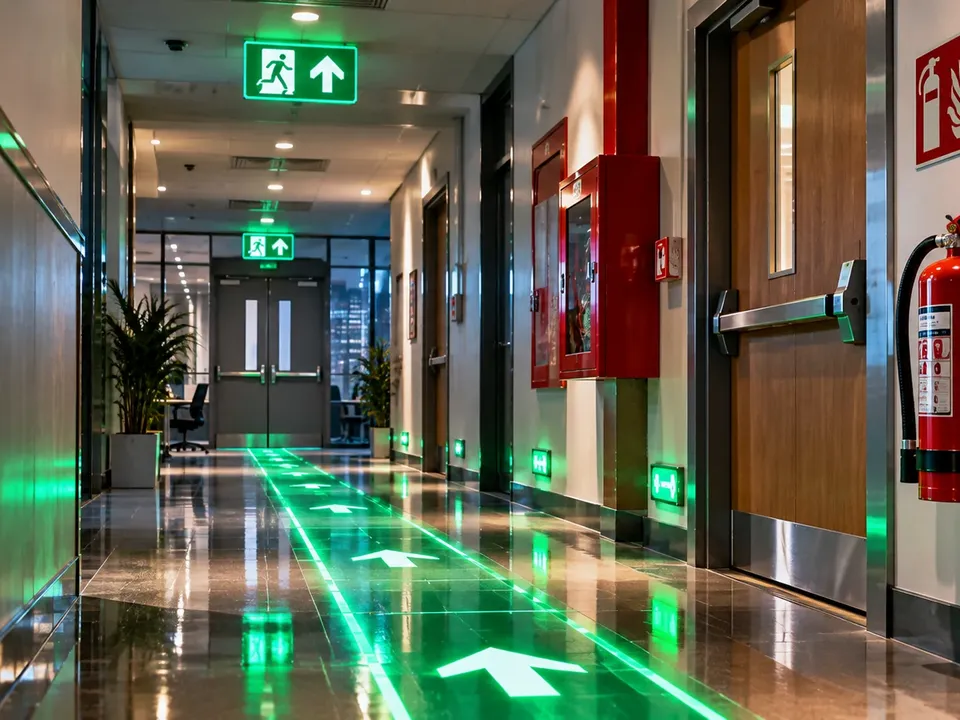
Prepare nominated staff to support orderly evacuation and recognise workplace fire-safety concerns within a clearly defined role. Participants connect…
 Training Programme
Fire Risk Assessment
Develop practical fire risk assessment skills for straightforward occupied workplaces. Participants identify ignition and fuel sources, consider…
Discuss Workplace Risk Assessment and Job Safety Analysis
Tell us about your scope, locations and intended timeframe for a focused response from TQCSI Arabia.